Rights. Justice. Action: How Rural Communities in North-East Nigeria are Rewriting the Rules for Women’s Equality

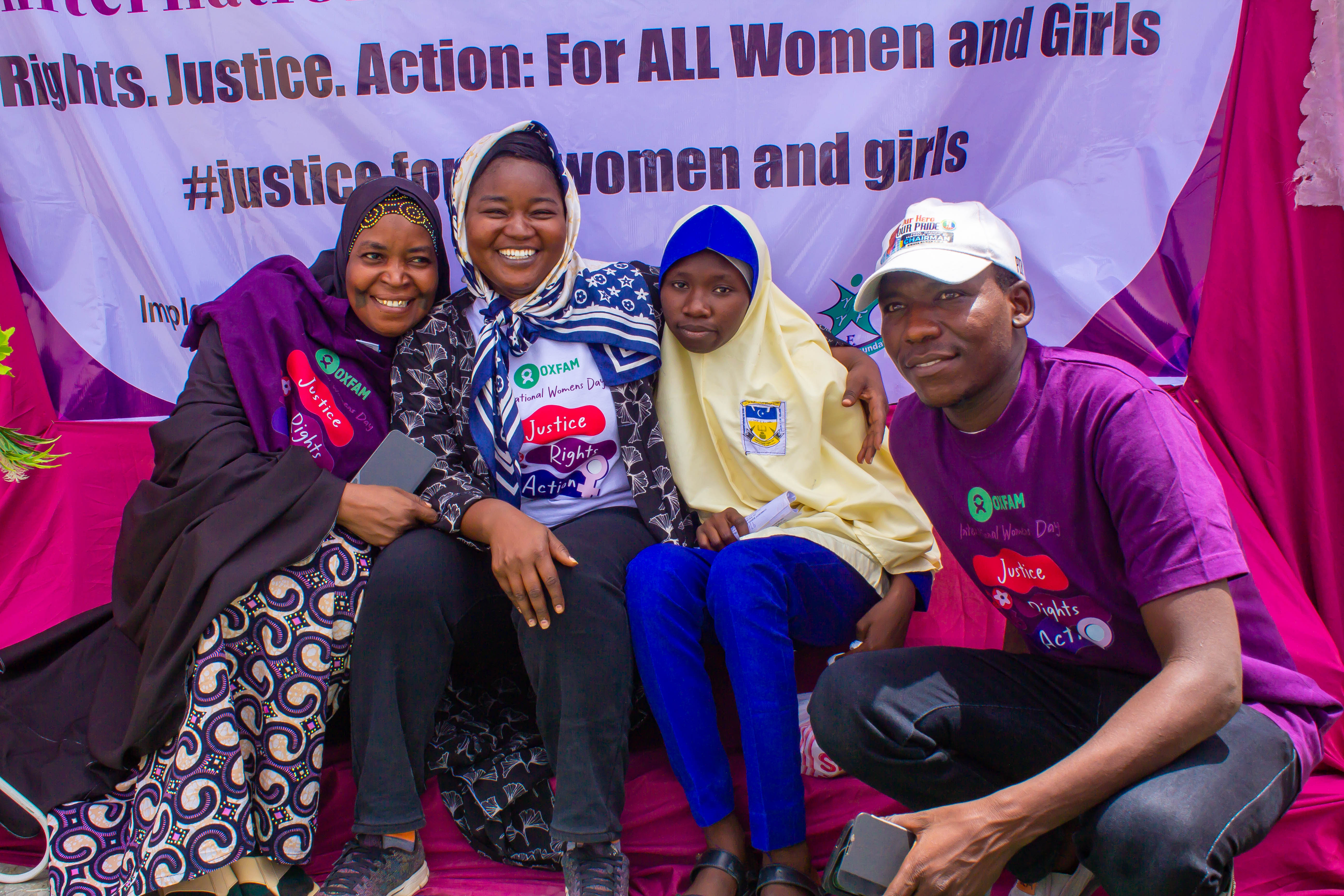
A diverse group of community members and organizers smiling together in front of an Oxfam International Women's Day 2026 banner in Kwaya Kusar, North East Nigeria. Photo - CODERHI
Every International Women’s Day, we hear a lot of big words and global statistics. But the real test of progress does not happen in conference rooms in Abuja or Geneva. It happens at the grassroots, right in the rural communities where everyday culture, money struggles, and a lack of schooling hold women back.
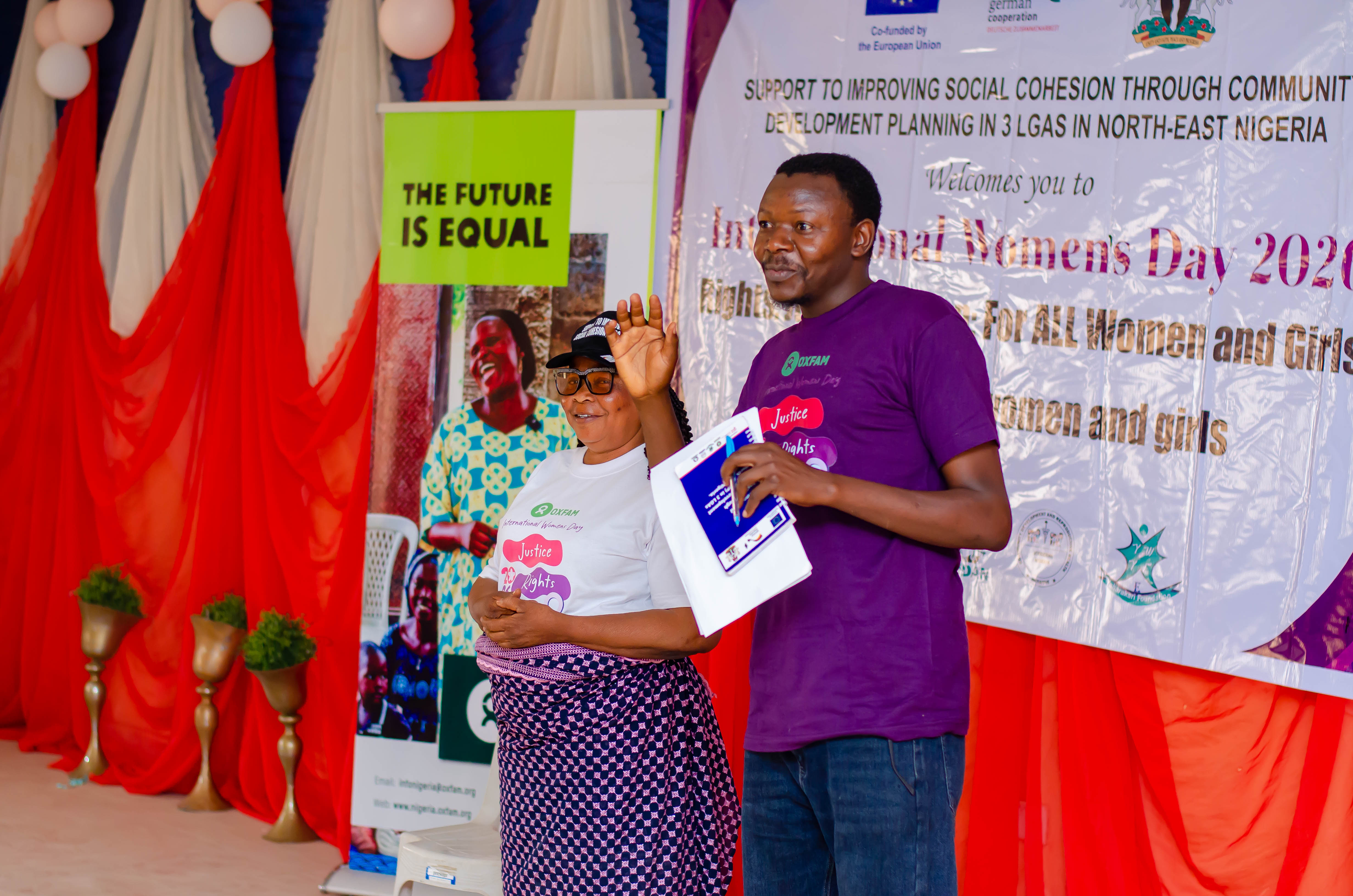
On March 16, 2026, we saw a powerful shift across Biu, Kwaya Kusar, and Guyuk Local Government Areas in North-East Nigeria. This was made possible through the "Support to Improving Social Cohesion through Community Development Planning" project. Co-funded by the European Union and German Cooperation, Oxfam teamed up with implementing partners Yaharakari Women and Youth Empowerment Foundation (YWYEF), Community Development and Reproductive Health Initiative (CODERHI), and Christian Rural and Urban Development Association of Nigeria (CRUDAN) to bring together women, traditional rulers, young people, and government officials.
Instead of the usual long speeches, the gatherings set a tone of deep unity right from the start. In Kwaya Kusar, for example, the event opened with joint prayers led by both a local Muslim community member and the Resident Pastor of E.Y.N Kwaya Kusar. With that strong foundation of social cohesion, they rallied under one clear message: 'Rights. Justice. Action: For ALL Women and Girls'. They had raw, honest conversations that sparked instant action, challenged age-old traditions, and celebrated women doing amazing things in business.

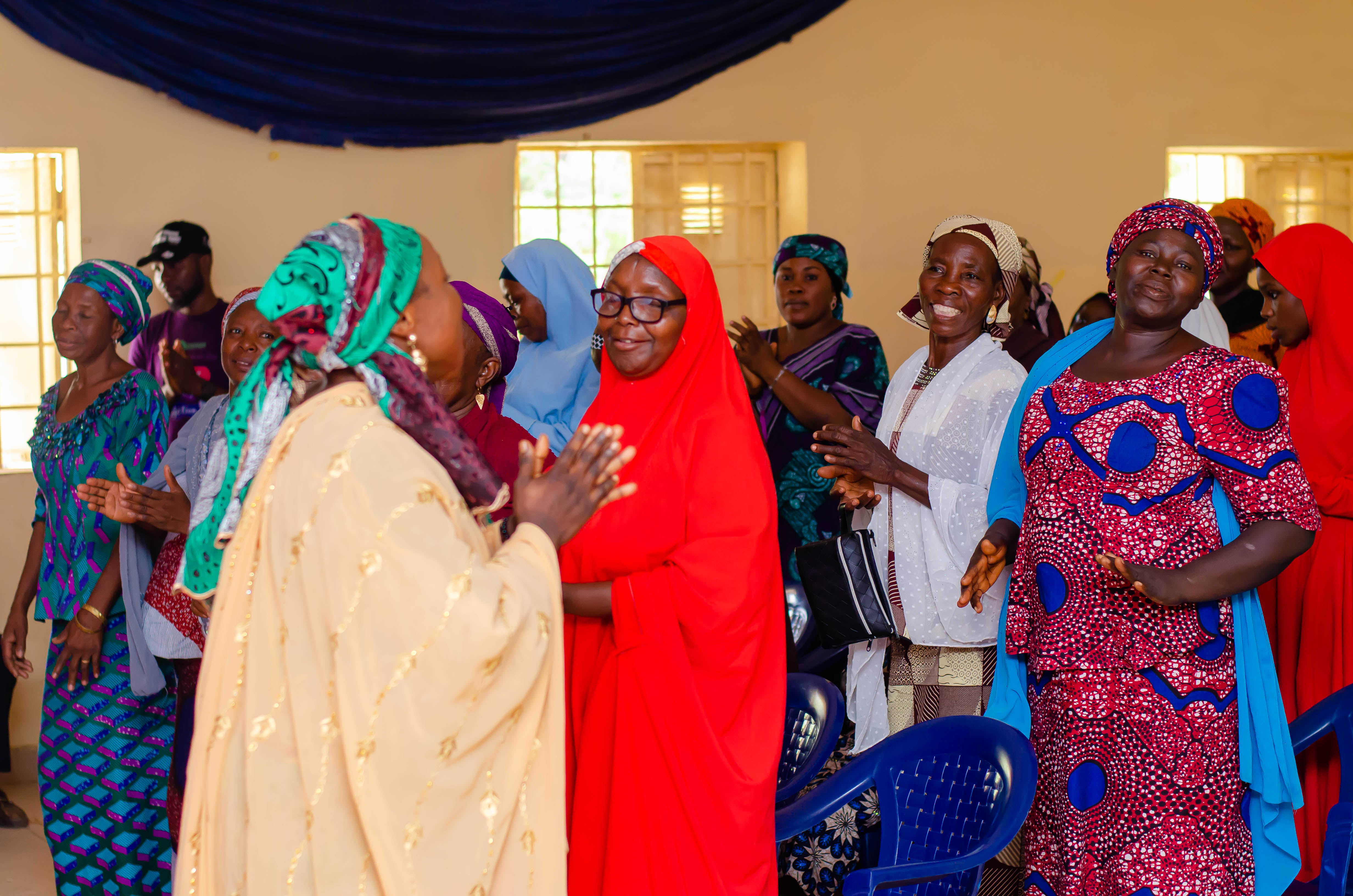
Women in Biu holding their hands open in a gesture of solidarity, demanding rights and justice during the International Women's Day 2026 interactive sessions. Photo - YWYEF

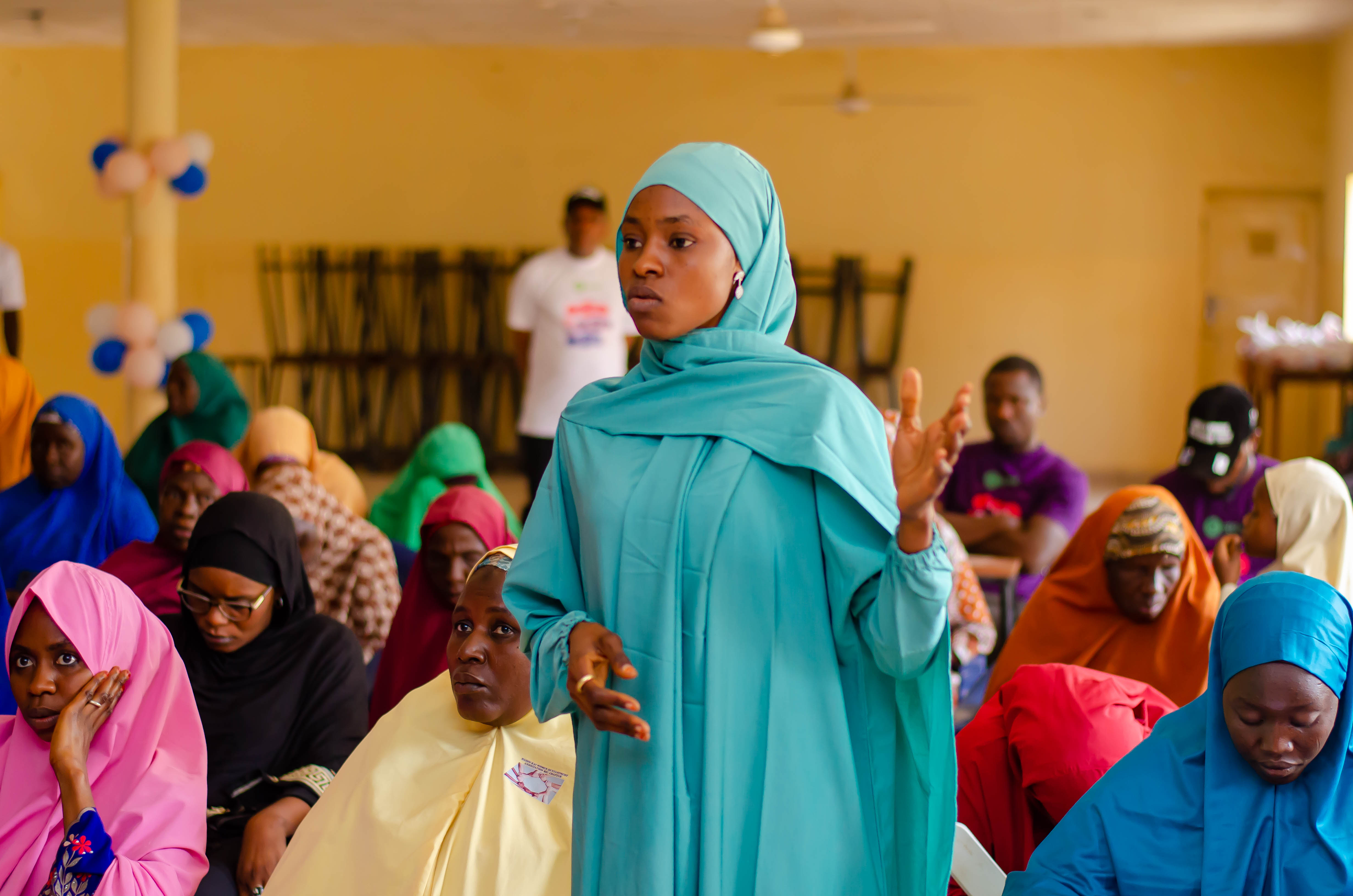
A young woman raising her hand to speak during an interactive community dialogue on women's rights and economic empowerment in Kwaya Kusar, North East Nigeria. Photo - CODERHI
Here is a look at the real impact unfolding in these communities
Taking Immediate Action: Protecting Our Girls
Talk is cheap, especially when a young girl's future is on the line. During a town hall in Kwaya Kusar about the hurdle’s women face, such as being left out of leadership and forced into early marriage, the conversation got very real with stakeholders committing to ensure stoppage of hindrances against women and girls.
Fatima Ibrahim, a student from the High Islamic School, stood up to share a heartbreaking story. She told the crowd about a classmate who was pulled out of school and forced into an early marriage, which left her suffering from a severe condition called Vesico-Vaginal Fistula (VVF). Driven by this pain, Fatima boldly declared her dream. She wants to study hard and become a gynecologist so she can care for young women going through similar traumas.
Her story moved everyone. But it did not end with just pity and clapping. Hajiya Iyani Ibrahim, a community leader and local clinic owner, saw the future of healthcare standing before her. She stepped right up and offered Fatima a full scholarship. This scholarship covers everything to finish her secondary school, including WAEC, NECO, and JAMB exams, keeping her dream of becoming a doctor alive.

A large, diverse group of community members, traditional leaders, and Oxfam partners posing for a commemorative photo to celebrate International Women's Day 2026 under the Rights Justice Action theme inside a hall in Guyuk, North East Nigeria. Photo - CRUDAN
Shifting Traditions: When Leaders Step Up
We cannot talk about leveling the playing field for women without facing the age-old traditions that still hold them back. In rural areas, traditional rulers have a huge say in how people live and who gets to own property.
During a panel in Guyuk, participants hit the nail on the head. Representatives of traditional leaders openly admitted that, under Lunguda customs, women have historically been banned from inheriting land or property. 'It was just the way things were'. But then came the breakthrough. The leaders announced they are actively working to wipe out this unfair practice, urging the whole community to treat women fairly.
They also tackled the issue of leadership. A woman asked why women were kept out of the traditional council, asking if their only job was to clap hands in the king's palace. A traditional leader responded with proof of change, citing a specific example in the neighbouring Shelleng Local Government Area, where a woman is currently serving as a traditional leader. While women were previously shut out, they are now being considered for real roles within the palace thanks to learnings from development partners.

A female leader with her arms wide open engaging a joyful audience of women and children in Biu LGA. Photo - YWYEF
From Small Hustle to Big Business
"Health is wealth, and a healthy community is a wealthy community," a youth leader in Guyuk reminded the crowd. The atmosphere at these events was electric, dynamic, and community-driven.
In Kwaya Kusar, organizers ran a rapid-fire "60-Second Women Impact Stories" session, where participants grabbed the mic to celebrate local women running essential daily businesses, from frying akara to managing market provisions.
Building that wealth means supporting women in business. Even when society or misinterpreted religious rules try to keep women from controlling their own money, the women of North-East Nigeria are pushing through as unstoppable breadwinners.
Take Monica in Guyuk LGA, for example. After her husband passed away, she did not fold. She took over a small provision store and worked hard to expand it, adding hibiscus and sorghum juice production. Today, that business pays for her children's education and supports her extended family.
Then there is Blessing in same LGA, who started her business with just a few thousand Naira. She grew it so well that she funded her own wedding needs. Even after retiring from a government job, her businesses are booming so much that nobody even noticed she retired, and she is comfortably sending her kids to the university.
These stories prove that when you put money and opportunities in the hands of women, the returns impact generations.
The Way Forward
The 2026 International Women’s Day commemorations in Biu, Kwaya Kusar, and Guyuk were a resounding success because they bridged the gap between awareness and action. From individual scholarships to shifting traditional inheritance laws and celebrating resilient entrepreneurs, the events showcased a comprehensive model for community development.
However, the work is far from over. Sustaining this momentum requires continued collaboration between Biu, Kwaya Kusar, and Guyuk local government councils, grassroots organizations, traditional leaders, and international donors to ensure that commitments translate into permanent policy and continuous support. When communities thrive, it is because women's rights are protected, and their potential is unleashed.