
Niger Delta Oil Divestment: Communities Demand HCDT Transparency and PIA Amendments in Eket Townhall

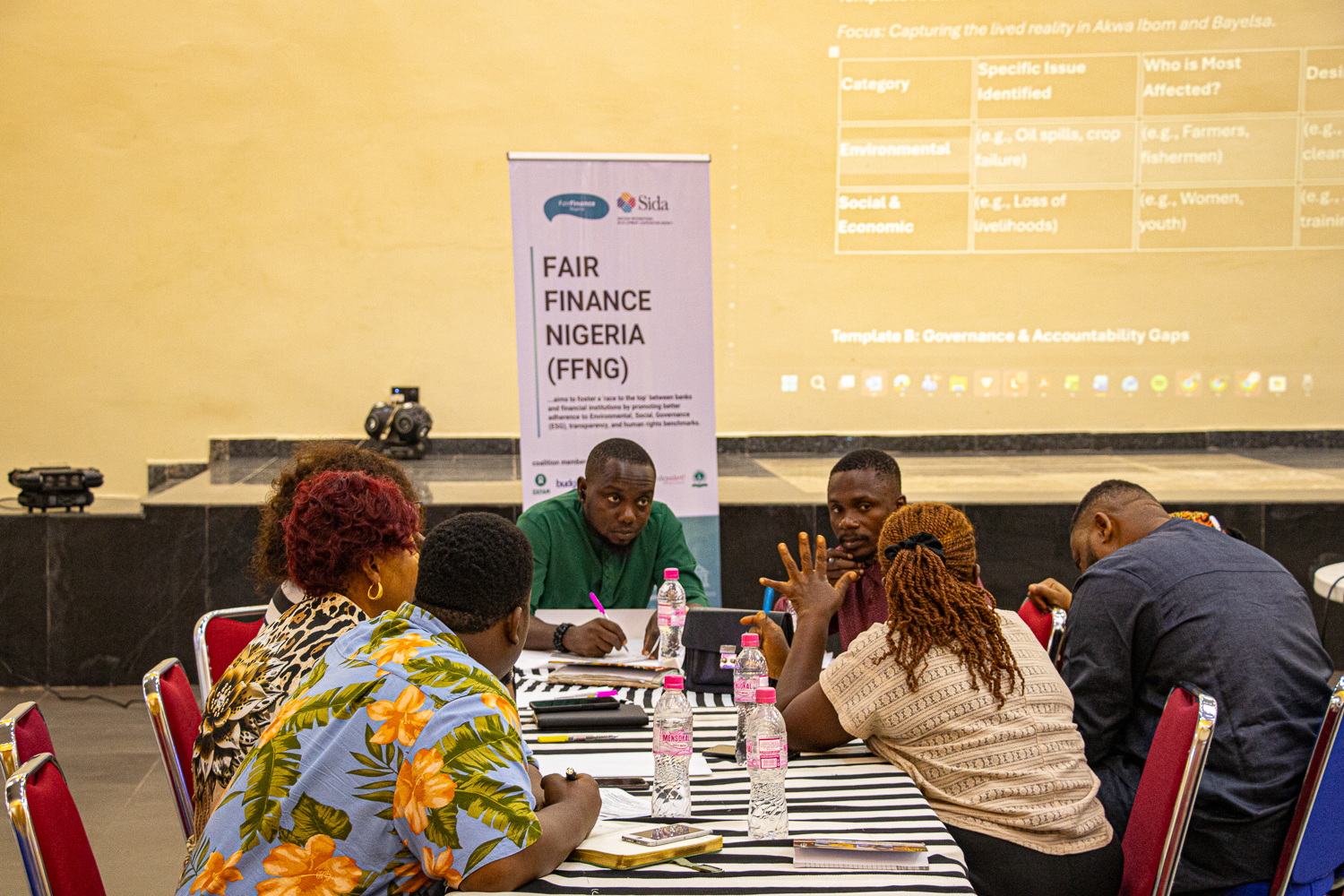
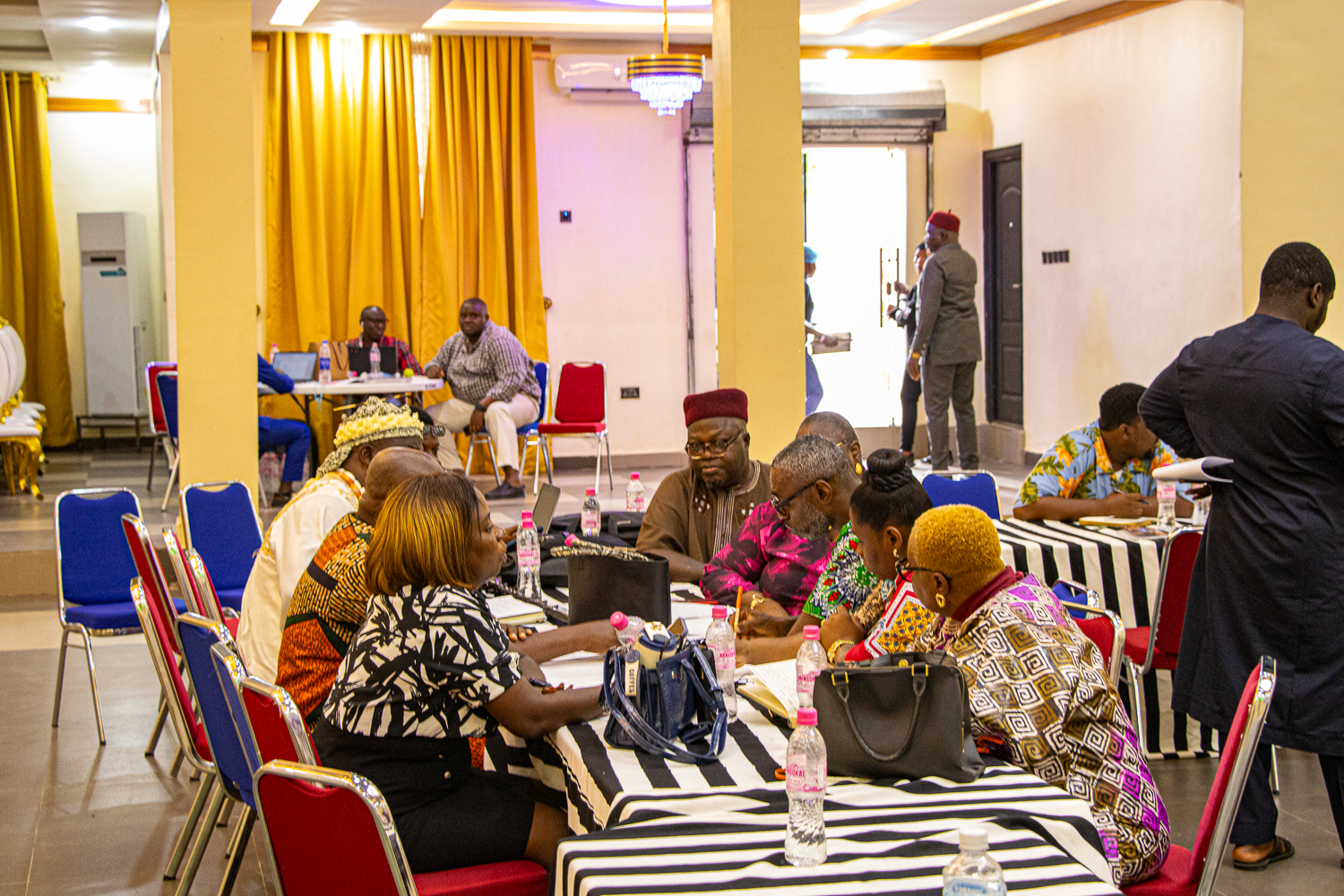
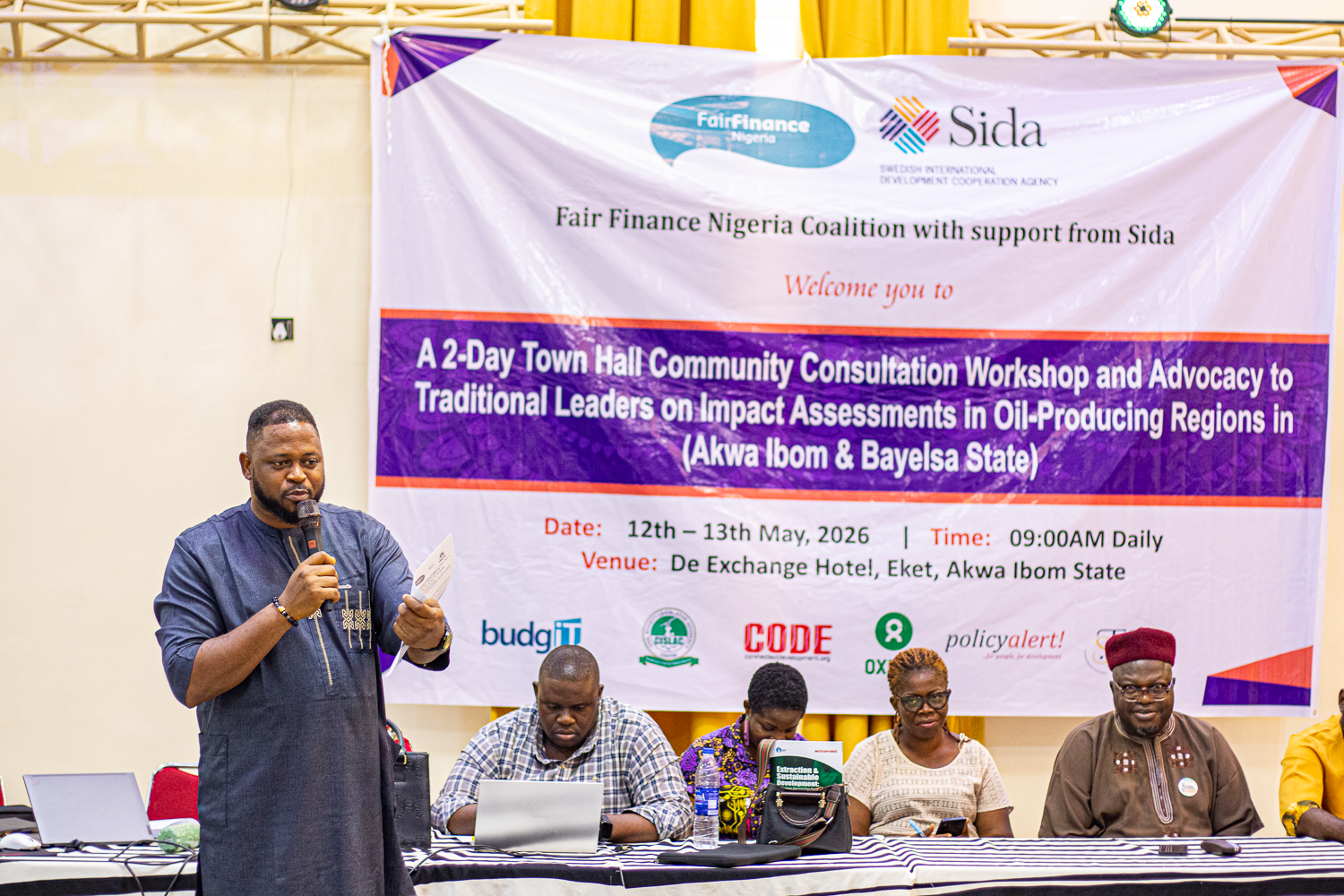
Participants at the 2-day Town Hall Community Consultation Workshop on impact assessments in oil producing regions. Photo credit: Maxwell Osarenkhoe/Oxfam.
For decades, Nigeria's oil producing regions have borne the heavy environmental, social, and economic burdens of extractive activities. While frameworks like the Petroleum Industry Act (PIA) and its Host Community Development Trust (HCDT) were designed to improve governance and community development, a massive gap remains in ensuring that community voices are reflected in decision making processes.
To bridge this gap and address systemic failures regarding oil spill compensation and the enforcement of NUPRC regulations, the Fair Finance Nigeria (FFNG) Coalition convened a pivotal two day Town Hall Community Consultation Workshop. Held in Eket, Akwa Ibom State, on the 12th and 14th of May 2026, the event brought together 41 participants, including traditional rulers, local government leadership, HCDT representatives, and civil society, from across Akwa Ibom and Bayelsa States.
The Lived Reality: 25 Years of Broken Promises
The living experiences shared during the town hall painted a devastating picture of life in the shadows of oil exploration. Community members detailed how seismic activities by oil companies are causing physical damage, such as the cracking of buildings. Oil and gas pollution, alongside coastal and gully erosion, continues to destroy the livelihoods of fishermen, farmers, and people with disabilities.
The health toll is equally catastrophic. Extractive activities pose severe hazards, resulting in respiratory and reproductive conditions, infertility, and a lowered life expectancy in oil communities.
Perhaps most damning is the systemic neglect. Community members reported that for over 25 years, they have been given forms to fill out for environmental hazard compensation, yet none has ever been paid. Environment, social, and governance (ESG) standards are frequently ignored or only partially complied with.

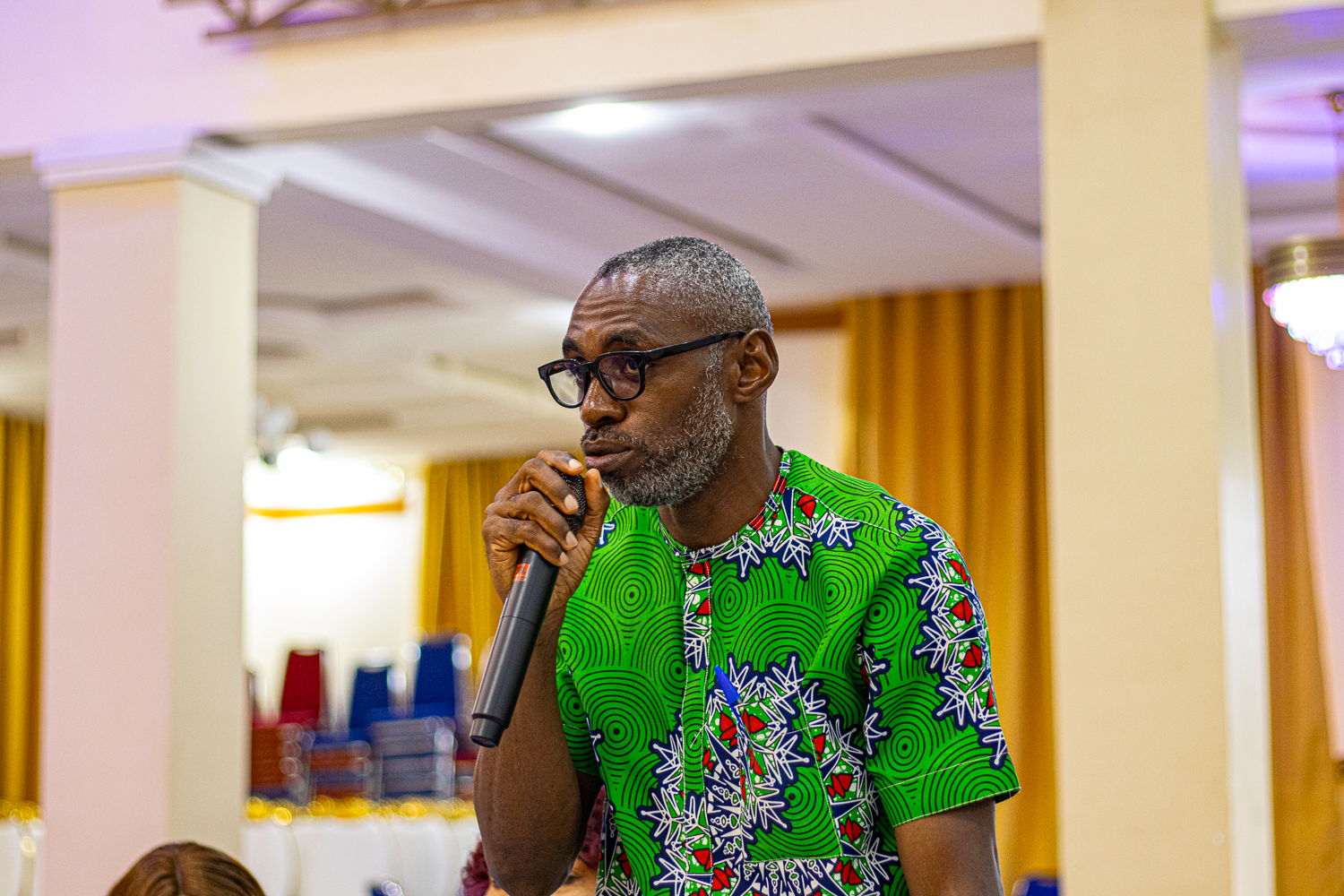
Community members shared devastating testimonies of systemic neglect and environmental degradation spanning over 25 years. Photo credit: Maxwell Osarenkhoe/Oxfam.

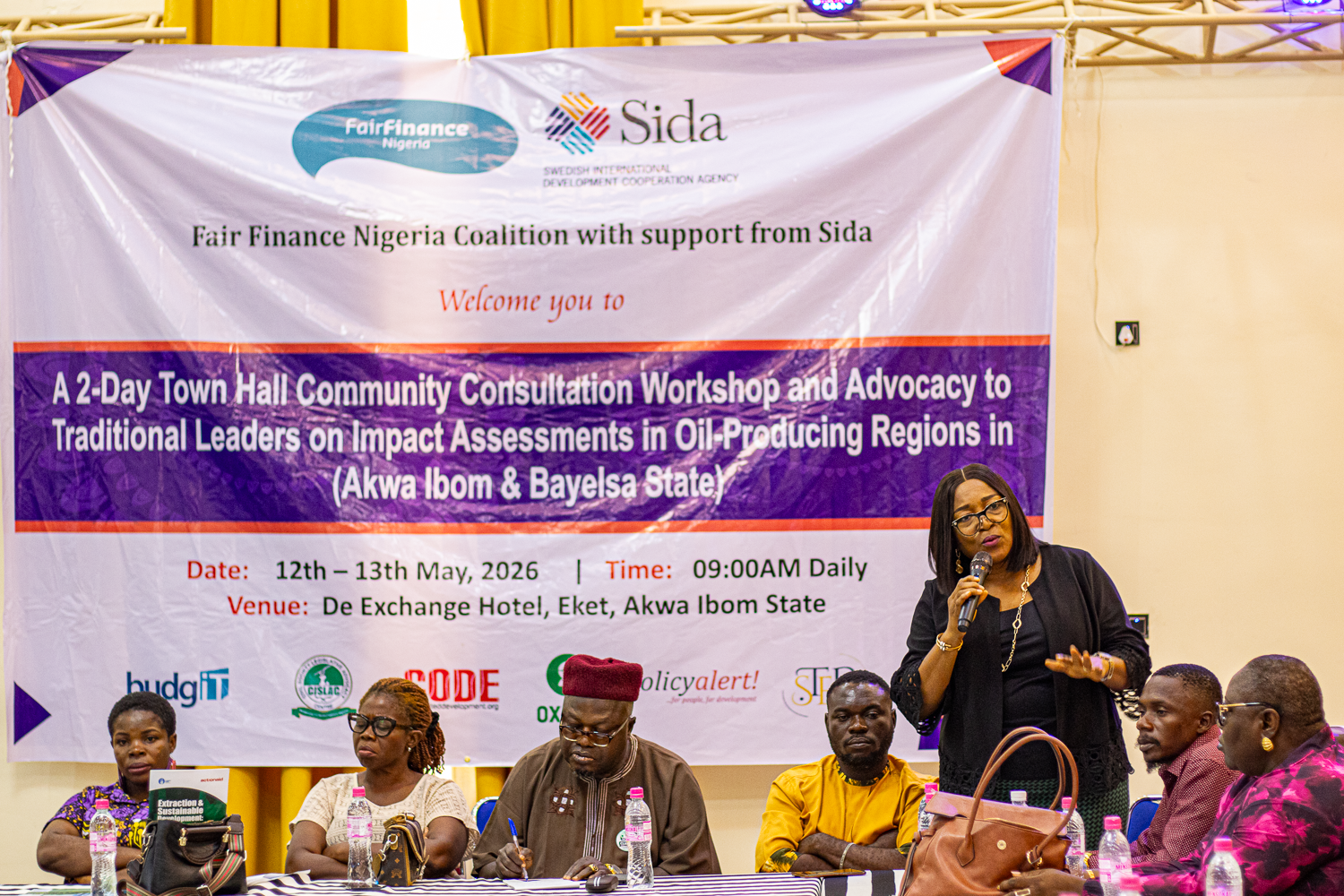
Civil society experts provided a detailed breakdown of the PIA and HCDT frameworks to help communities understand their legal rights. Photo credit: Maxwell Osarenkhoe/Oxfam.
The Stolen 3% and the Transparency Deficit
A major focus of the consultation was the governance of the HCDT funds. Under the PIA, oil companies are mandated to contribute an amount equal to 3 percent of their actual operating expenditure (OPEX) from the preceding year into these trusts. However, participants observed allegations of corruption and opacity in the operation and management of the HCDT funds, which kills the trust of community members and denies the Trust needed support.
This opacity is compounded by poor financial data disclosure by settlors and regulators. There is also a glaring lack of inclusion; few women are awarded contracts or benefits from the HCDT funds and projects. Furthermore, there is poor representation and participation of women, youths, and persons with disabilities in decision making and leadership on the HCDT boards.
The Community Mandate: Demands for Immediate Action
The communities are no longer just asking for help; they are demanding structural accountability. Traditional leaders and community representatives generated actionable recommendations for policy and stakeholder engagement, including:
- Amend the PIA for Environmental Relief: The National Assembly should amend the PIA 2021 to "ring fence" the gas flare penalty exclusively for the purpose of environmental remediation and relief of the host community.
- Stop Profiting from Pollution: The Federal Government should not view gas flaring penalties in Nigeria as a revenue stream, as it violates the polluter pays principle. The President should rescind Executive Order 9, which pays the gas flare penalty as revenue to the federation account at the expense of the people who bear the brunt of the pollution.
- Mandate Inclusive Governance: The PIA must be reviewed to provide for 40% representation of women, youths, and persons with disabilities in the composition of the membership of the Trust.
- Enforce Successor Liability: Settlors who have divested can still be sued internationally after they have left their previous mining locations without compliance to the ESG standards and payment for the gas flare penalty.
- Empower the Displaced: There must be a provision of finance and skill acquisition to empower community members who have lost their source of livelihood due to oil exploration activities.

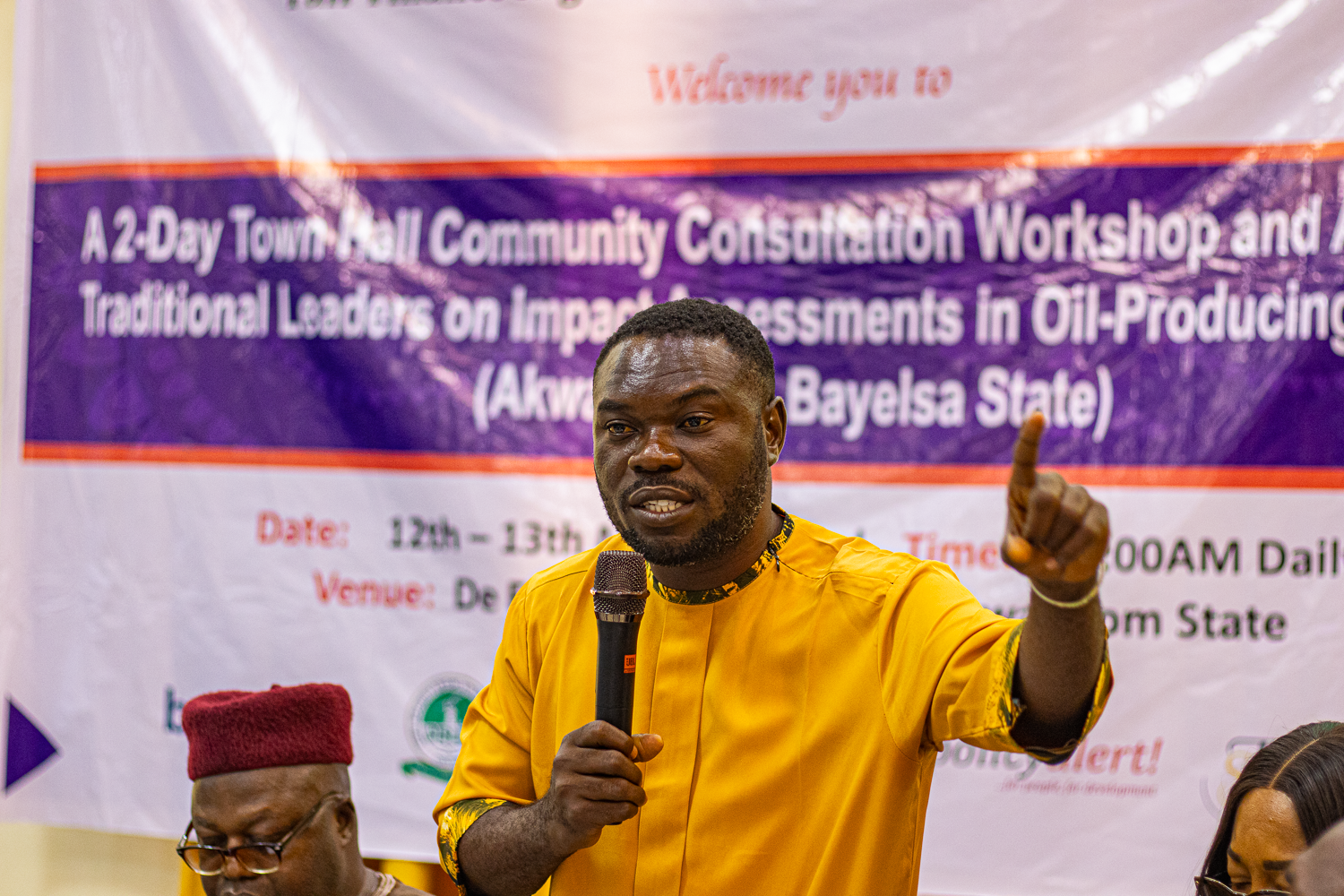
Traditional leaders took a firm stand, demanding that the National Assembly amend the PIA to ring fence gas flare penalties for environmental remediation. Photo credit: Maxwell Osarenkhoe/Oxfam.
Title
Action & Engagement Photo Gallery
Stand With the Niger Delta
The time for corporate opacity and regulatory capture is over. The traditional leaders and communities of Ibeno, Eastern Obolo, Ayakirama, and Azuzuama have spoken, and they are demanding action.
We invite journalists, advocates, policymakers, and the public to read the full findings and join us in holding both legacy oil companies and their successors accountable.
READ OR DOWNLOAD THE RESOURCES
Together, we can ensure that the wealth of the host communities is no longer misappropriated, and that environmental justice becomes a reality.