Seeds of Change: What Women Farmers Are Teaching Us About Food Security in Jigawa and Bauchi States

Women farmers of the Farmer Field School in Jigawa State. Photo: Maxwell Osarenkhoe/Oxfam
Harira Musa first heard about rice farming on the radio. Experts were discussing how to grow it and what it could mean for farmers. She kept thinking about it, and she kept hoping for a chance to try it herself.
That chance came through the Crop Diversity for Food Security in West Africa project, supported by the Hans Geveling Foundation, Books 4 Life Eindhoven and the Anton Jurgens Fonds.
A dream that took root
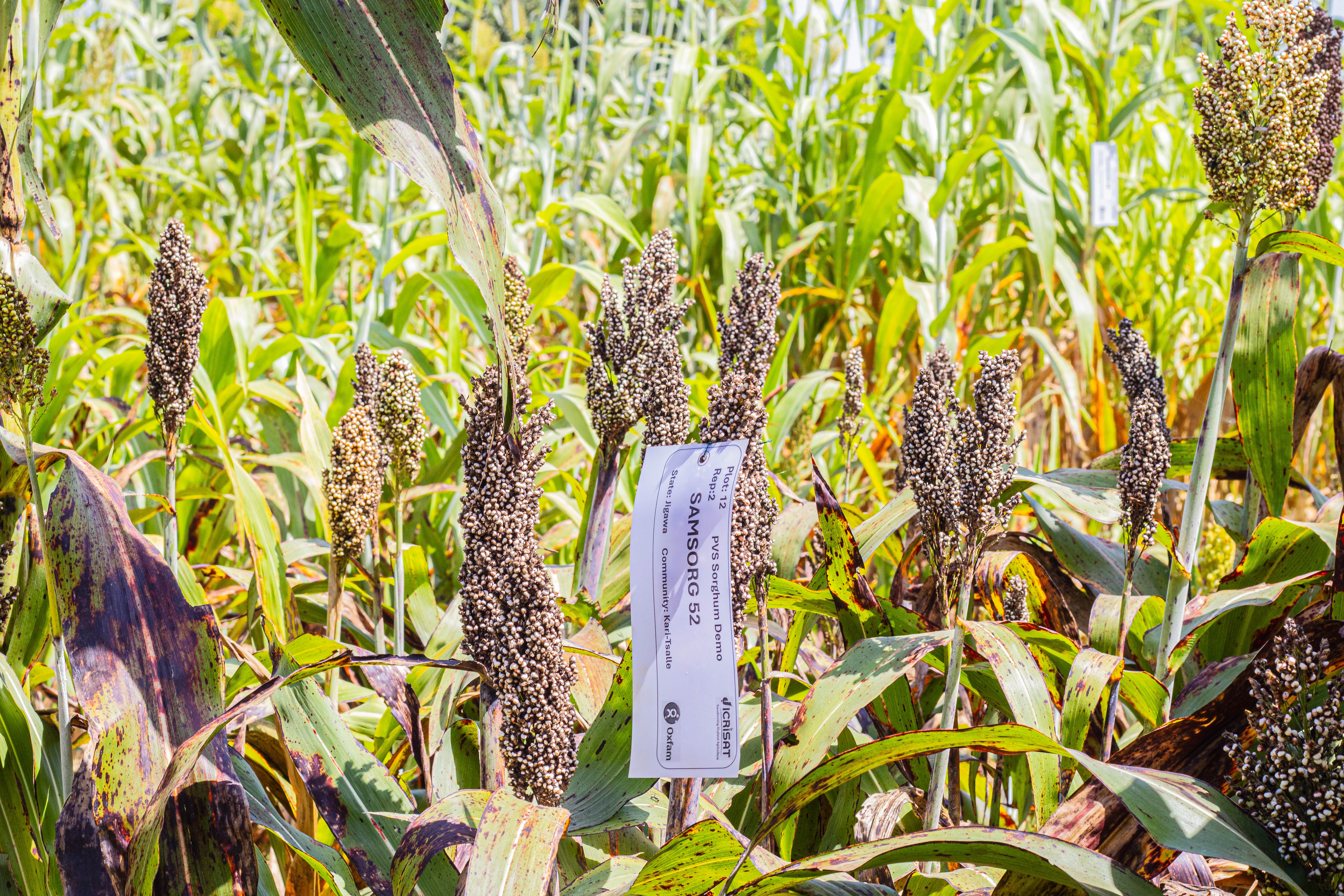
At Kari Tsalle community in Taura LGA, Jigawa State, Harira, 33, joined a women-only Farmer Field School (FFS). During a mentorship session on Participatory Variety Selection (PVS) plot design, she stood out for her enthusiasm.
“Our group selected sorghum for now. I will work on sorghum to support my husband this season. Next season, I hope to actualise my dream from the experience I will gain this season.”

Share photo of Harira Musa at the PVS plot in Kari Tsalle, Taura LGA, Jigawa State.
“Planting rice for the first time”
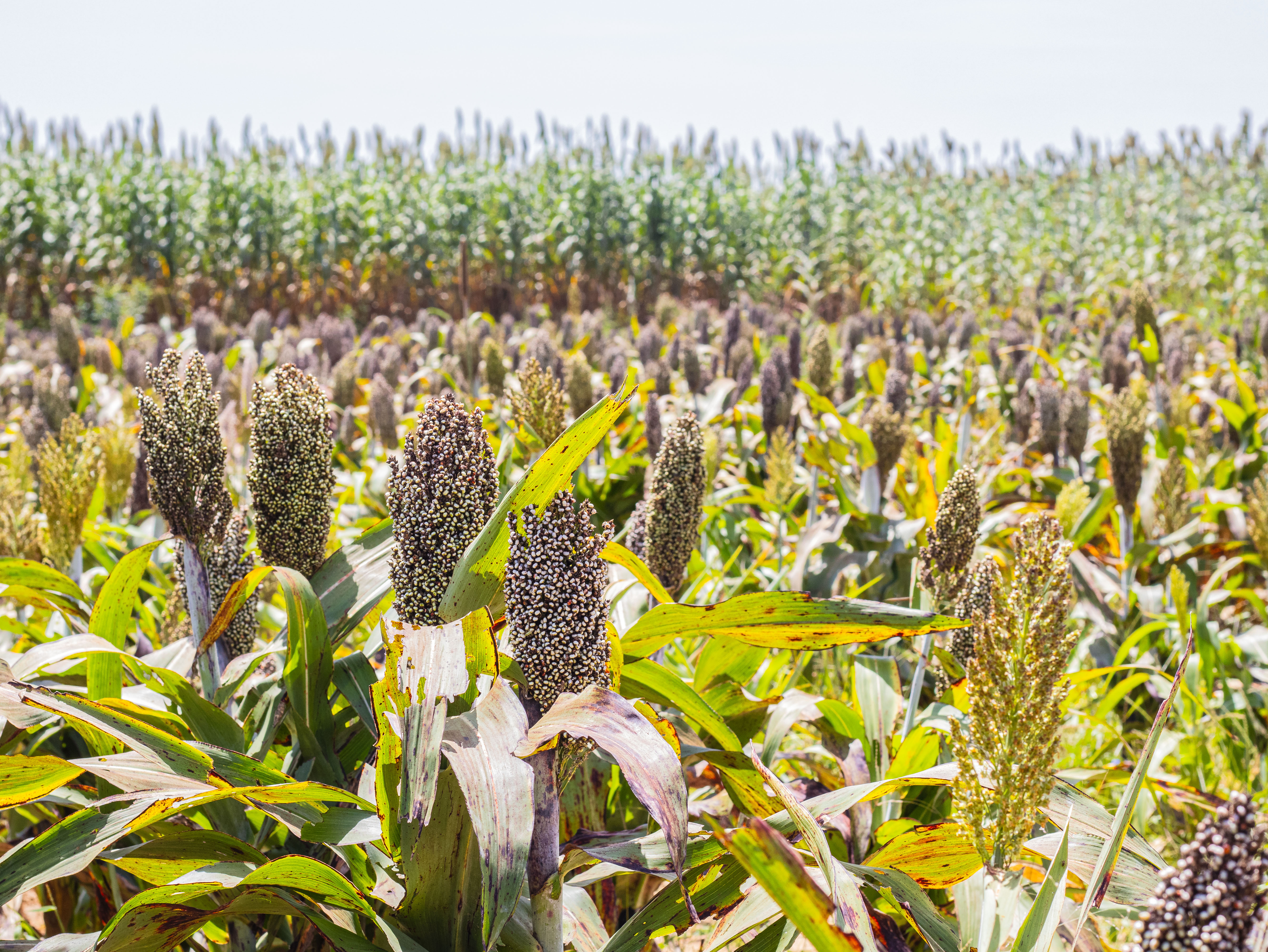
In Yana community, Shira LGA, Bauchi State, the women of the Matan Kwarai FFS shared a similar sense of possibility. Many said that during the PVS plot design and planting visit, they planted rice with their own hands for the first time, in a community setting where women’s voices in farming decisions are still growing.
The women began by investing their own money. The women pooled ₦35,000 to rent a plot for their rice trial and seed production, then raised another ₦25,000 for land clearing and preparation. That is ₦60,000 of their own money, alongside the training and support the project provides.
They are testing five new rice varieties and will identify the best performer this season. They also want to improve household nutrition and earn income through the group.
Fatsuma Abdu, who took part in the visit from another Yana group, said the initiative is putting them on a path to their 'promised land', a future of greater self-reliance.

Share photo of The women of the Matan Kwarai FFS at their rice trial plot in Yana, Shira LGA, Bauchi State.
How it works
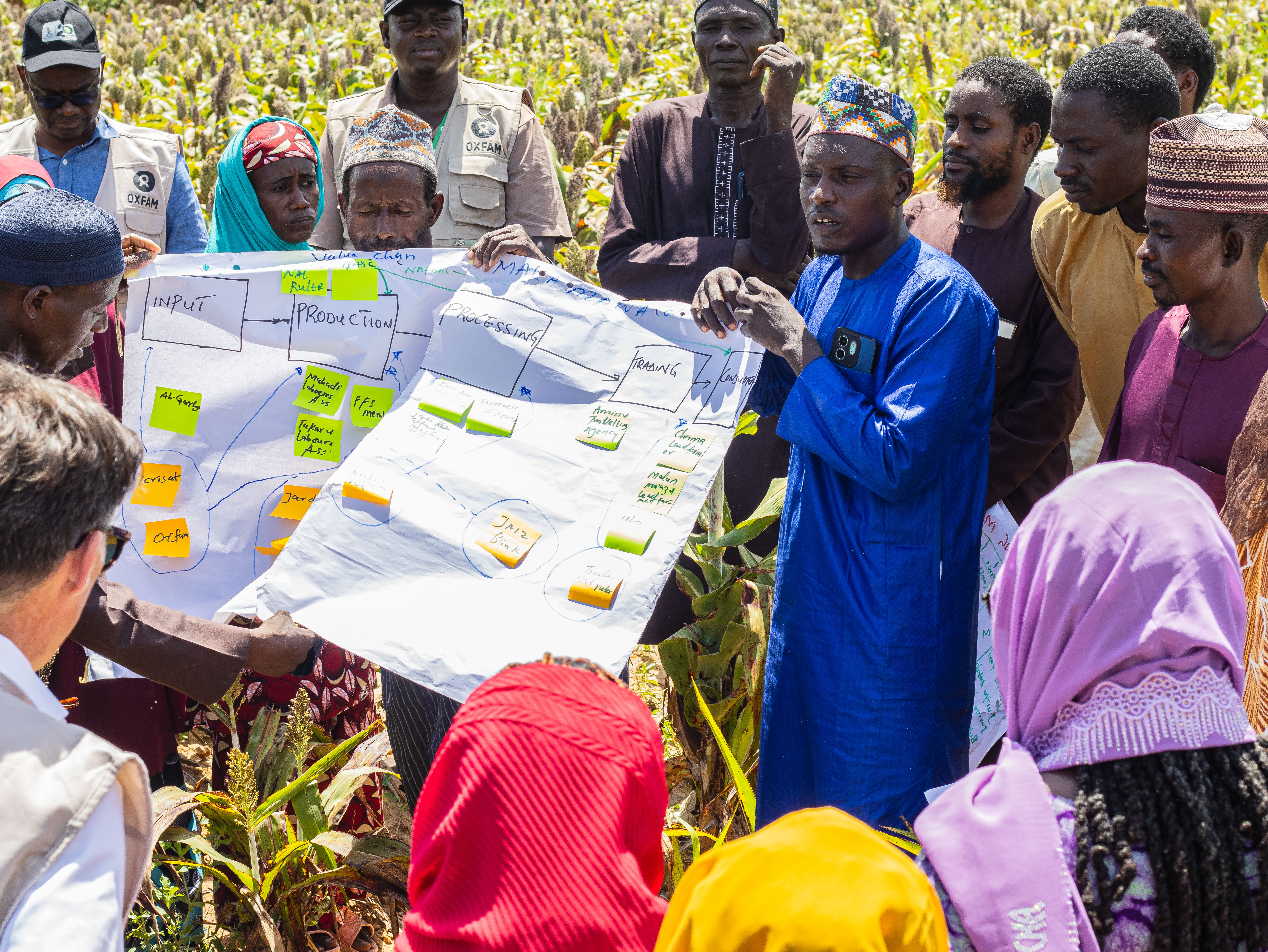
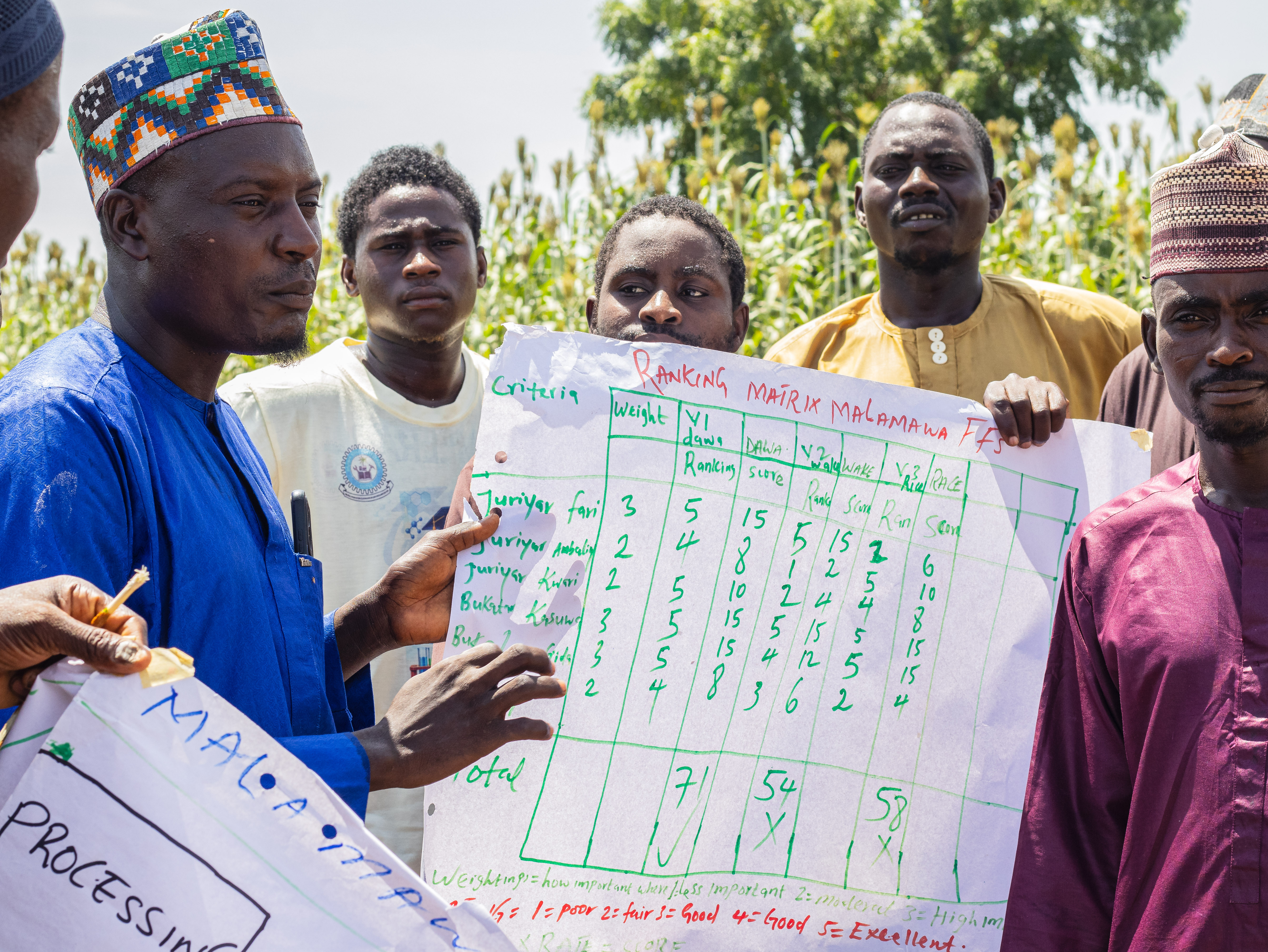
The Crop Diversity for Food Security project works with smallholder communities in conflict-affected areas of Nigeria and Mali. Two approaches drive the work. In Participatory Variety Selection, farmers test crop varieties on their own land and choose the ones that perform best in their local conditions. In Farmer Field Schools, groups learn together, share knowledge and solve problems collectively, which also builds trust and cooperation in the community.
The project also supports local seed businesses so that quality seed is available closer to the farmers who need it. (I need confirmed figures here, such as number of FFS groups, women participants or hectares under PVS. I will delete this sentence if when I clean up the edit.)
What our field visit tells us
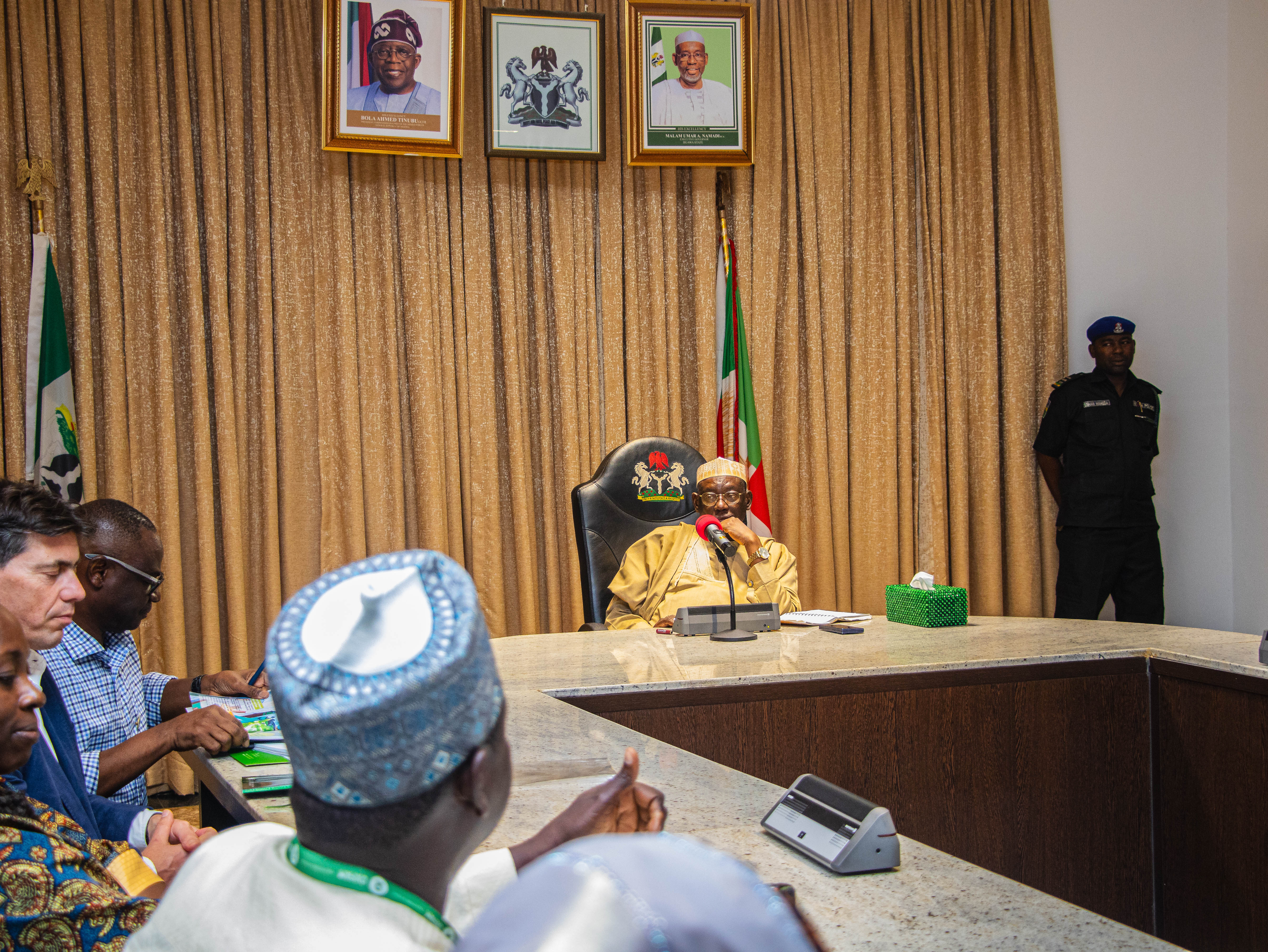
In October, the Director of Programmes visited farming communities in Jigawa and Kano to see the project’s progress. Farmers and stakeholders spoke openly about what stands in their way. The Yana women’s story speaks directly to the first challenge, land is often the hardest barrier, and these women chose to meet it with their own savings. That commitment is the kind of foundation partners can build on.

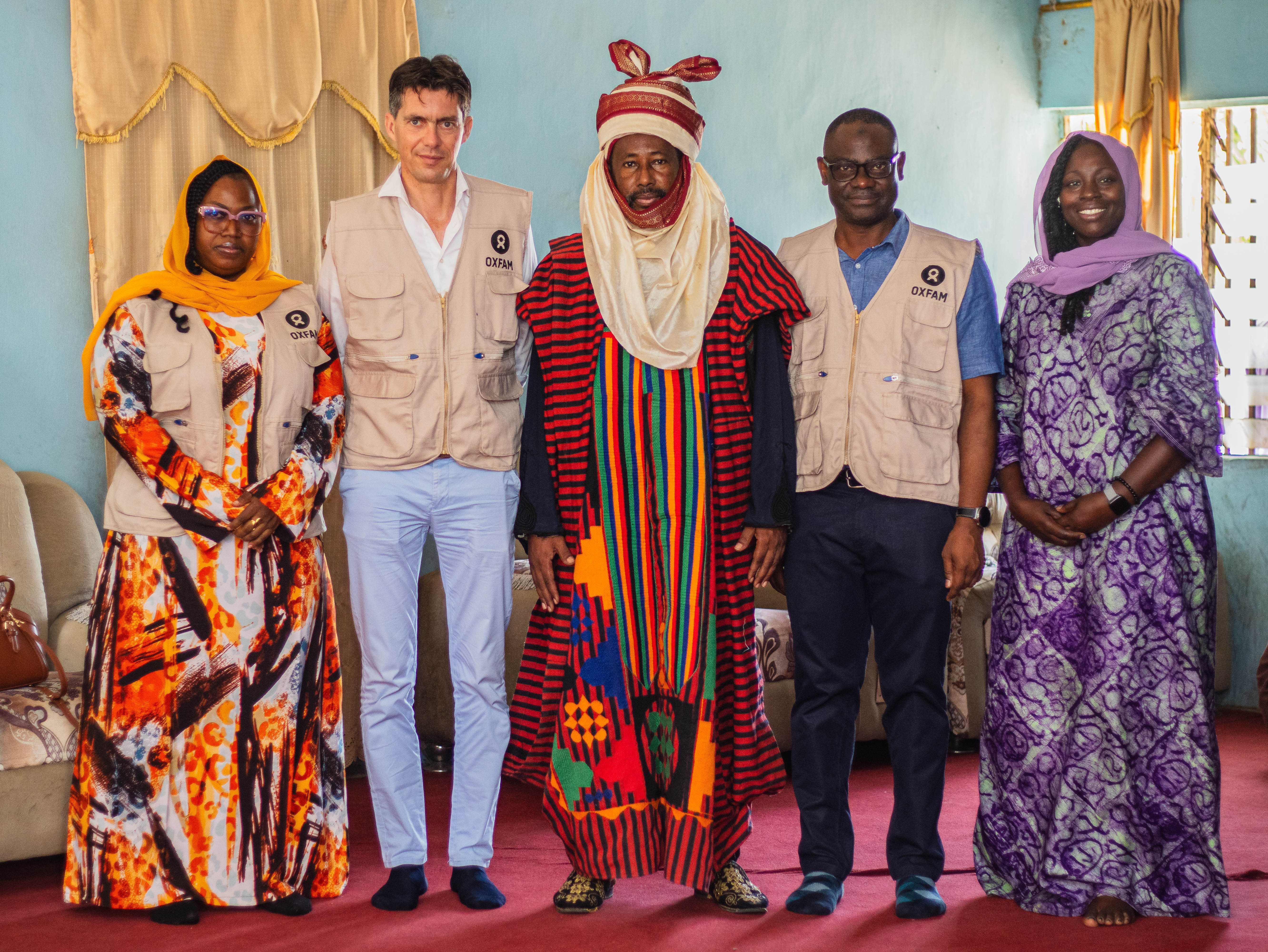
Oxfam Novib's Director of Programmes, Pepijn Gerrit's and Oxfam Nigeria Country Director, Hamza Tijani, with farmers during the October field visit to Jigawa. Photo: Maxwell Osarenkhoe/Oxfam
The project is now following up with government partners on land access and collaboration, and developing a sustainability and scale-up plan so that today’s gains last beyond the current phase. For now, the real work is happening in the fields. In Jigawa, Harira is growing sorghum and preparing for next season. In Bauchi, the women of Yana are tending their rice trial. After the harvest, we will share what they learned.
Select a challenge below to see what farmers and stakeholders raised, and what they recommended.
What stands in the way, and what could help
Raised during the Director of Programmes’ visit to Jigawa and Kano, October 2026. Select a challenge to see what stakeholders recommended.
Access to land
Many smallholder farmers have limited access to agricultural land.
- Explore sustainable ways to increase farmers’ access to land.
- Engage government authorities on land access, starting with a meeting with the Commissioner for Environment.
The women of the Matan Kwarai Farmer Field School pooled ₦35,000 to rent a plot, then raised another ₦25,000 to clear it. That is ₦60,000 of their own money for their rice trial.
Quality farm inputs
Farmers struggle to access quality farm inputs.
- Strengthen work that improves access to quality inputs and improved seed varieties.
- Keep supporting farmer groups through stronger seed systems and crop diversification.
Fertilizer cost and supply
Fertilizer is expensive and hard to get.
- Improve farmers’ access to fertilizer.
- Build evidence-based advocacy on the constraints smallholder farmers face.
Mechanisation
Access to mechanisation services is limited.
- Improve access to productive resources and technologies.
- Deepen links with the Jigawa State Agricultural Transformation Agency (JATA), relevant ministries and research partners such as ICRISAT.
Climate pressures
Climate-related challenges continue to affect production.
- Promote crop diversity and varieties that suit local conditions, chosen by farmers through Participatory Variety Selection.
- Share knowledge with research institutions and continue policy dialogue on sustainable agriculture and food security.
The Crop Diversity for Food Security in West Africa project is supported by the Hans Geveling Foundation, Books 4 Life Eindhoven and the Anton Jurgens Fonds.